

In the fast-moving world of business, staying competitive as a small or medium-sized enterprise (SME) can sometimes feel like trying to outrun a cheetah on a treadmill—it’s a constant challenge. Limited resources, tight deadlines, and shifting customer expectations often conspire to derail even the most ambitious projects. But how can they win and thrive? That is where Agile project management steps in, not just as a methodology but as your secret weapon. Agile isn’t just about going with the flow; it’s about creating the flow and riding it to success.
Let’s dive into why Agile project management isn’t just helpful but essential for SMEs.
Spoiler alert: It’s not magic—it’s just really smart project management.
THE SMEs STRUGGLE IS REAL
Running a small or medium-sized enterprise (SME) often means wearing multiple hats, and let’s face it, some of them just don’t fit. Managing projects is one of those responsibilities—it can feel too big, too small, or simply uncomfortable. You’re juggling limited budgets, scarce talent, and deadlines that seem to have passed already.
But here’s the real kicker: even when you think you’ve got everything under control, a new challenge pops up. Maybe it’s a last-minute client request, a supplier who ghosted you, or a market shift that happens so suddenly. Here are common challenges SMEs frequently encounter;
- Customer Expectations: Customers today expect faster service and tailored solutions, putting additional strain on resources.
- Team Coordination: Smaller teams often juggle multiple responsibilities, which can lead to misalignment and reduced efficiency.
- Limited Budgets: SMEs need to make every dollar count, leaving no room for inefficient processes.
- Shifting Priorities: Customer needs and market conditions can change overnight, demanding quick adjustments.
Without the right tools and strategies, these challenges can feel overwhelming. This is where Agile methodology comes into play, saying, “Hold my coffee!”
WHAT IS AGILE, WHY MOSTLY AGILE?
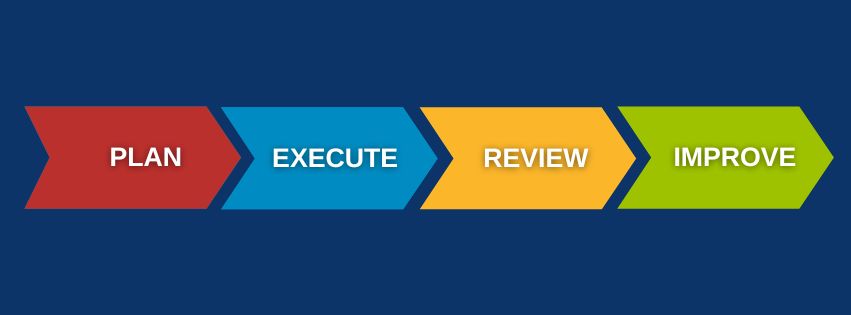
Agile project management is like ‘the top-rated’ of business strategies—versatile, efficient, and always delivering. It’s a methodology designed for flexibility and collaboration, allowing teams to adapt to changes faster than you can say, “pivot.” Instead of working on a project like it’s a novel that has to be finished before anyone reads a single chapter, Agile breaks things into smaller, manageable chunks called “sprints.” This means your team can focus on delivering one chapter at a time, getting feedback, and making improvements as they go.
In a glance, these are some of Agile’s key uniqueness:
- Agile Project management entails short, focused work cycles called Sprints that deliver incremental RESULTS.
- Regular check-ins to align on progress and tackle roadblocks called Scrum Meetings and
- Continuous Improvement based on feedback to ensure maximum value
Think of Agile as a system that lets you course-correct in real time instead of waiting until the end of a project to address issues
WHY IS AGILE A MUST-HAVE FOR SMEs
Adopting Agile is more than just a process change—it’s a survival strategy for SMEs in competitive markets. Here’s how it benefits SMEs
- Flexibility to Adapt: Bend but don’t break): Agile can handle sudden changes like a pro. Whether your client wants a last-minute feature or the market shifts overnight, Agile’s flexibility lets you pivot without breaking stride—or breaking a sweat.
- Faster Time-to-Market: In the world of Agile, time is money, and sprints ensure you’re not wasting either. Delivering value in small increments means faster time-to-market and quicker wins.
- Improved Team Collaboration: Agile encourages collaboration across teams with frequent check-ins and open communication, everyone stays on the same page
- Customer-Centric by Design: Agile prioritizes delivering what your customers need—not what you think they need.
How SMEs Can Apply Agile Project Management
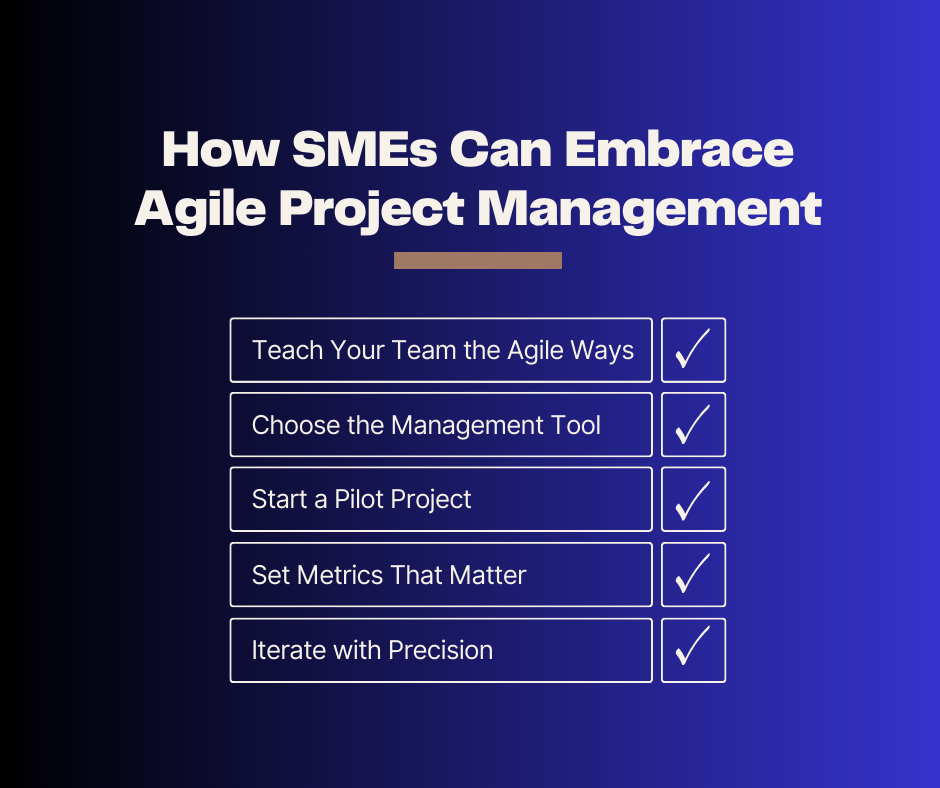
Transitioning to Agile doesn’t require a full overhaul—it’s about integrating practical steps that align with your business model. Here’s how your SME can dive into Agile without feeling like you’re drowning:
- Teach Your Team the Agile Ways
Agile training is an essential first step, akin to mastering cooking techniques before opening a restaurant. Certifications in frameworks like Scrum provide a strong basis and guarantee your team understands important ideas including sprints and stand-ups. - Get the Right Tools
Platforms such as Jira, Trello, and Asana serve as essential tools for Agile project management. They keep everyone on track and eliminate those awkward, “Wait, who was supposed to do that?” moments. - Start Small, Dream Big
Begin with a pilot project. If you’re nervous, remember: Agile doesn’t demand perfection—it thrives on progress. - Set Metrics That Matter
Track success with key performance indicators (KPIs) like delivery speed, customer satisfaction, and employee morale Leverage these insights to continually refine and improve your processes. - Iterate with Precision
Agile is a continuous process, not a one-time effort. Regular feedback loops drive consistent improvement, ensuring your processes mature and evolve efficiently over time.
MEASURING THE SUCCESS AND CHALLENGES WITH AGILE
To determine whether your Agile implementation is working, track the following metrics:
- Delivery Speed: Compare the time taken to complete projects before and after Agile adoption.
- Customer Satisfaction: Use surveys and Net Promoter Scores (NPS) to gauge client feedback on delivered projects.
- Team Productivity: Monitor task completion rates and overall team efficiency.
- Budget Adherence: Check if Agile helps minimize project overruns.
While Agile offers numerous benefits, SMEs might encounter these challenges:
- Resistance to Change: Teams accustomed to traditional workflows may resist Agile.
Solution: Offer training sessions and emphasize the benefits of Agile through real-world examples. - Lack of Expertise: SMEs may lack in-house knowledge of Agile methodologies.
Solution: Hire consultants or invest in certified Agile training programs. - Scaling Issues: Applying Agile to larger projects can be complex.
Solution: Start with a pilot and gradually scale Agile practices across teams and projects.
Staying competitive in today’s market isn’t about doing more—it’s about doing it smarter. Agile project management gives SMEs the tools to thrive, delivering value to customers while keeping teams motivated and on track.
So, Agile is your business’s ultimate cheat code, whether launching a new product or fixing old processes. Ready to embrace the Agile edge? For free, contact us for real solutions and see how Agile can revolutionize your business!
 Realsols